
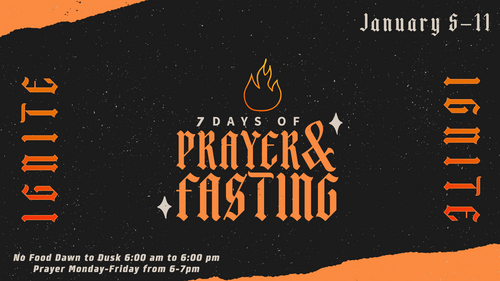
Ignite: 7 Days of Prayer and Fasting
Fasting is one of the most powerful spiritual disciplines of all the Christian disciplines. It is a way to align our hearts with the psalmist: “My soul thirsts for God, the living God” (Psalm 42:2). “It’s a means of God’s grace to strengthen and sharpen our Godward affections,” writes David Mathis in his book “Habits of Grace.” Through fasting and prayer, the Holy Spirit can transform your life. When God’s people fast with a proper biblical motive — seeking God’s face, not His hand — with a broken, repentant and contrite spirit, God will hear from heaven. He will heal our lives, our churches, our communities, our nation and our world. Fasting and prayer can bring about a change in the direction of our nation, the nations of the earth and the fulfillment of the Great Commission.
Fasting Disclaimer
As you begin your fast, you may hear from concerned loved ones and friends who urge you to protect your health. And they are right — you should protect your health. But I assure you, if done properly, fasting will prove to be not only a spiritual blessing but a physical blessing as well. By all means, consult your doctor before you begin your fast. But be aware that many doctors have not been trained in this area, so their understanding may be limited. Even so, it would be wise to ask your doctor for a physical exam to make sure you are in good health. You may have a physical problem that would make fasting unwise or dangerous. Also, if you are taking any type of medication, make sure to talk to your doctor before changing your regimen. Prudence and caution are in order. When you are assured that you are in good health, you are ready to begin your fast. Follow the guidelines in the pages on physical preparations and maintaining nutritional balance and health
Types of Fasts
Selective Fast
This type of fast involves removing certain elements from your diet. One example of a selective fast is the Daniel Fast, during which you remove meat, sweets, and bread from your diet and consume water and juice for fluids and fruits and vegetables for food.
Complete Fast
In this type of fast, you drink only liquids, typically water with light juices as an option.
Partial Fast
This fast is sometimes called the “Jewish Fast” and involves abstaining from eating any type of food in the morning and afternoon. This can either correlate to specific times of the day, such as 6:00 am to 6:00 pm, or from sunup to sundown.
Soul Fast
This fast is a great option if you do not have much experience fasting food, have health issues that prevent you from fasting food, or if you wish to refocus certain areas of your life that are out of balance.For example, you might choose to stop using social media or watching television for the duration of the fast and then carefully bring that element back into your life in healthy doses at the conclusion of the fast.
7 Steps to Fasting
How you begin and conduct your fast will largely determine your success. By following these seven basic steps to fasting, you will make your time with the Lord more meaningful and spiritually rewarding.
Step 1: Set an Objective for Your Fast
Why are you fasting? Is it for spiritual renewal? For guidance? For healing? For the resolution of problems? For special grace to handle a difficult situation? Ask the Holy Spirit to clarify what He wants you to take away from this time. This will enable you to pray more specifically and strategically.
Through fasting and prayer, we humble ourselves before God so the Holy Spirit will stir our souls, awaken our churches and heal our land according to 2 Chronicles 7:14. Make this a priority in your fasting.
Through fasting and prayer, we humble ourselves before God so the Holy Spirit will stir our souls, awaken our churches and heal our land according to 2 Chronicles 7:14. Make this a priority in your fasting.
Step 2: Commit to Your Fast
Pray about the kind of fast you should undertake. Jesus implied that all of His followers should fast (Matthew 6:16-18; 9:14-15). For Him, it was a matter of when, not if, believers would fast. Before you fast, decide the following:
- How long you will fast— one meal, one day, a week, several weeks, forty days? (Start slowly and build up to longer fasts.)
- The type of fast God wants you to undertake, such as water only or water and juices, as well as what kinds of juices you will drink and how often.
- What physical or social activities you will restrict.
- How much time each day you will devote to prayer and God’s Word.
Step 3: Prepare Yourself Spiritually
The foundation of fasting and prayer is repentance. Unconfessed sin will hinder your prayers. Here are several things you can do to prepare your heart:
- Ask God to help you make a comprehensive list of your sins.
- Confess every sin that the Holy Spirit reminds you of and accept God’s forgiveness (1 John 1:9).
- Seek forgiveness from anyone you have offended and forgive anyone who has hurt you (Mark 11:25; Luke 11:4; 17:3-4).
- Make amends with people as the Holy Spirit leads you.
- Ask God to fill you with His Holy Spirit according to His command in Ephesians 5:18 and His promise in 1 John 5:14-15.
- Surrender your life fully to Jesus Christ as your Lord and Master and refuse to obey your worldly nature (Romans 12:1-2).
- Meditate on the attributes of God — His love, sovereignty, power, wisdom, faithfulness, grace, compassion and other qualities (Psalm 48:9-10; 103:1-8, 11-13).
- Begin your time of fasting and prayer with an expectant heart (Hebrews 11:6).
- Do not underestimate spiritual opposition. Satan sometimes intensifies the natural battle between body and spirit (Galatians 5:16-17).
Step 4: Prepare Yourself Physically
Fasting requires reasonable precautions. Consult your physician first, especially if you take prescription medication or have a chronic ailment. Some people should never fast without professional supervision. Physical preparation makes the drastic change in your eating routine a little easier so you can turn your full attention to the Lord in prayer. Remember the following:
- Do not rush into your fast.
- Prepare your body. Eat smaller meals before starting a fast. Avoid high-fat and sugary foods.
- Eat raw fruits and vegetables for two days before starting a fast.
Step 5: Put Yourself on a Schedule
Your time of fasting and prayer has come. You are abstaining from all solid foods and have begun to seek the Lord. Here are some helpful suggestions to consider:
- Limit your physical activity.
- Exercise only moderately. Walk one to three miles each day if convenient and comfortable.
- Prepare yourself for temporary mental discomforts, such as impatience, crankiness and anxiety.
- Expect some physical discomforts, especially on the second day. You may have fleeting hunger pains or dizziness. Withdrawal from caffeine and sugar may cause headaches. Physical annoyances may also include weakness, tiredness or sleeplessness.
The first two or three days are usually the hardest. As you continue fasting, you are likely to experience a sense of well-being both physically and spiritually. However, should you feel hunger pains, increase your liquid intake.
Step 6: Break Your Fast Gradually
When your designated time for fasting is finished, you will begin to eat again. But how you break your fast is extremely important for your physical and spiritual well-being. Begin eating gradually. Do not eat solid foods immediately after your fast. Suddenly reintroducing solid food to your stomach and digestive tract will likely have negative, even dangerous, consequences. Try several smaller meals or snacks each day. If you end your fast gradually, the beneficial physical and spiritual effects will result in continued good health.
Here are some suggestions to help you end your fast properly:
Here are some suggestions to help you end your fast properly:
- Break an extended water fast with fruit such as watermelon.
- While continuing to drink fruit or vegetable juices, add the following
- First day: Add a raw salad.
- Second day: Add baked or boiled potato, no butter or seasoning.
- Third day: Add a steamed vegetable.
- Thereafter: Begin to reintroduce your normal diet.
- Gradually return to regular eating with several small snacks during the first few days. Start with a little soup and fresh fruit such as watermelon and cantaloupe. Advance to a few tablespoons of solid foods such as raw fruits and vegetables or a raw salad and baked potato.
Step 7: Expect Results From Your Fast
Fasting is about sincerely humbling yourself before the Lord. It provides time to repent, pray, seek God’s face and meditate on His Word. As you do this, you will experience a heightened awareness of His presence (John 14:21).
The Lord will give you fresh spiritual insights. Your confidence and faith in God will be strengthened. You will feel mentally, spiritually and physically refreshed. You will see answers to your prayers.
A single fast, however, is not a spiritual cure-all. Just as we need fresh a infilling of the Holy Spirit daily, we also need new times of fasting before God. A 24-hour fast each week has been greatly rewarding to many Christians.
It takes time to build your spiritual fasting muscles. If you fail to make it through your first fast, do not be discouraged. You may have tried to fast too long the first time out, or your may need to strengthen your understanding and resolve.
As soon as possible, undertake another fast until you do succeed. God will honor you for your faithfulness. We encourage you to join us in fasting and prayer again and again until we truly experience revival in our homes, our churches, our beloved nation and throughout the world.
The Lord will give you fresh spiritual insights. Your confidence and faith in God will be strengthened. You will feel mentally, spiritually and physically refreshed. You will see answers to your prayers.
A single fast, however, is not a spiritual cure-all. Just as we need fresh a infilling of the Holy Spirit daily, we also need new times of fasting before God. A 24-hour fast each week has been greatly rewarding to many Christians.
It takes time to build your spiritual fasting muscles. If you fail to make it through your first fast, do not be discouraged. You may have tried to fast too long the first time out, or your may need to strengthen your understanding and resolve.
As soon as possible, undertake another fast until you do succeed. God will honor you for your faithfulness. We encourage you to join us in fasting and prayer again and again until we truly experience revival in our homes, our churches, our beloved nation and throughout the world.